The positive results of noise pollution control in China will further improve the quality of acoustic environment.
CCTV News:On June 5th, a year ago, the Law on the Prevention and Control of Noise Pollution in People’s Republic of China (PRC) was formally implemented, and the word "environment" was removed from the name of the old law, so as to emphasize that the object of legal norms is man-made noise and further clarify the responsibility of local governments. One year has passed, what is the effect of the implementation of the "New Noise Pollution Prevention Law"?
According to the national acoustic environmental quality monitoring, in 2022, the national acoustic environmental functional zones reached the standard rate of 96.0% in the daytime and 86.6% at night. The average daytime equivalent sound level in urban areas of China is 54.0 decibels. Professionals point out that this volume is basically equivalent to that of normal indoor chatting and computer host, which has limited influence on people’s lives.

Although the current noise pollution control work has achieved positive results, due to the large amount of noise pollution, there are still regulatory gaps in some noise sources.

Yang Long, Deputy Director, Department of Atmospheric Environment, Ministry of Ecology and Environment:In the next step, we will work with relevant departments to focus on source prevention and control, problem management, and scientific and technological support. We will comprehensively promote the construction of national automatic acoustic environment stations, and plan to realize automatic monitoring of more than 3,800 monitoring points in cities above prefecture level in about two years.
At the same time, the Ministry of Ecology and Environment will strengthen supervision and law enforcement, and lead the demonstration by setting a benchmark for industrial enterprise governance and publishing a catalogue of low-noise construction equipment; We also create a comfortable environment through the construction of quiet communities and the creation of quiet car.
In order to improve the quality of acoustic environment, all localities are also exploring the power of science and technology to reduce noise pollution. In Zhuhai, Guangdong Province, the local acoustic radar technology was used to develop and build automatic noise monitoring equipment, which can accurately identify man-made noise. When the noise volume exceeds the specified value for 10 seconds, the device will automatically give a voice reminder and upload it to the law enforcement department.
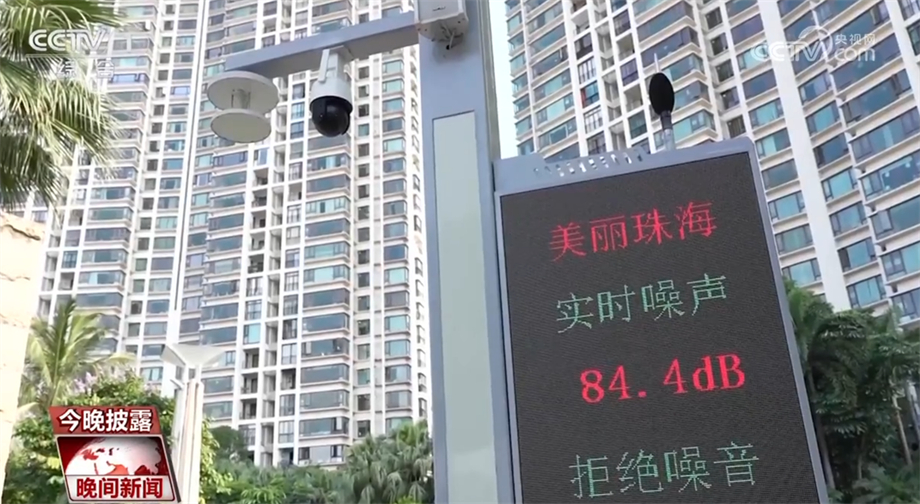
Tao Tiwei, Deputy Mayor of Nanping Town, Xiangzhou District, Zhuhai City, Guangdong Province:With this (monitoring equipment), we can completely obtain evidence. After this equipment has been running for one month, we have not received any complaints about square dance.
In addition, Zhuhai has specially built a movable "sound insulation artifact" for square dance speakers, which uses high-resistance nano sound absorption materials to absorb low-and medium-frequency noise. At the same time, the structure with three closed sides and one open side can reduce the noise from spreading around.
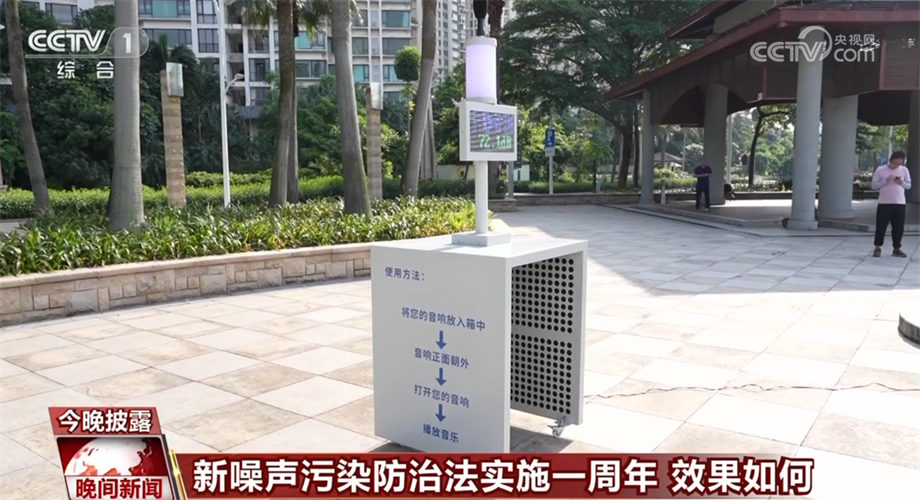
In life, reducing the long stay in noisy environment and using headphones reasonably can also reduce the impact of noise on us.
Cheng Lei, deputy chief physician of Beijing Shijitan Hospital affiliated to Capital Medical University:At ordinary times, some people like to wear headphones to listen to music, so they can master the principle of "606060", that is, the volume of listening to music should not exceed 60% of the maximum volume, the continuous listening time should not exceed 60 minutes, and the external volume should not exceed 60 decibels. It is recommended not to use headphones in noisy public places and when sleeping, so as not to aggravate hearing damage.
If you feel sudden hearing loss after exposure to noise, you must seek medical attention in time. Doctors can effectively treat patients with sudden deafness by using hormones, drugs for promoting blood circulation and neuroleptics.