L4 Autopilot will detonate in five years.
 Source: Oriental IC
Electrification has given cars more imagination.
"The future car will be transformed from a mechanical and electrical product driven by one person into a digital product driven by artificial intelligence." According to Cang Xuejun, general manager of Shangyan Zhilian Intelligent Travel Technology (Shanghai) Co., Ltd., with the electrification of automobiles, the system will become the main body of automobile driving.
In the classification formulated by the state, smart cars are clearly divided into five levels. Among them, L3 and L4 are often regarded as two divisions of autonomous driving technology.
The biggest difference between vehicles above L4 level and L3 level is that vehicles above L4 level have multiple redundant minimum risk operation strategies, and can automatically slow down or stop in case of distress without relying on manual takeover. That is to say, L3 or L4 determines the different driving subjects. Compared with the illusory L5, the L4-level autopilot technology is more realizable.
In fact, L4-class self-driving cars are moving from algorithm stage to mass production.
At the just-past 2022 World Artificial Intelligence Conference (WAIC), the discussion of L4 smart cars by industry people became more and more heated. When will L4-class self-driving cars become frequent visitors on the road? What is the safety of self-driving cars? At the level of laws and regulations, how should we legislate for L4-class self-driving cars?
Class 01 L4 autopilot will detonate in five years.
After mobile phone manufacturers entered the automobile industry one after another, the fully automatic driving of car-machine interconnection has become the ultimate dream of many car companies.
Li Xuan, vice president of Guangzhou Wen Yuan Zhixing Technology Co., Ltd., predicted that by 2030, global autonomous driving will develop into a huge market of trillion dollars and 10 trillion RMB. In the global self-driving market of 1.7 trillion US dollars, the China market will reach 640 billion US dollars, accounting for 37.65% of the global total.
If the market is subdivided according to the level of autonomous driving, 88% of the market will be created by L4-level autonomous driving, and the market of L2+ and L3 will only occupy 12%. If divided by scene, more than half of the market will be composed of self-driving freight including trunk transportation and freight in the same city, reaching 54%. For the rest, self-driving taxis account for 31% and self-driving buses account for 15%.
Such speculation is not groundless. As far as Wen Yuan Zhixing is concerned, they have both pure unmanned test licenses in China and the United States, and its tobotaxi has been operating for more than 1,000 days.
According to the official data released by Shanghai in 2021, a total of 615 test roads with a length of 1289.83km were opened in Shanghai, with 12,000 testable scenarios. Up to now, Shanghai has issued 458 road test and demonstration application qualifications to 26 enterprises, ranking first in the country.
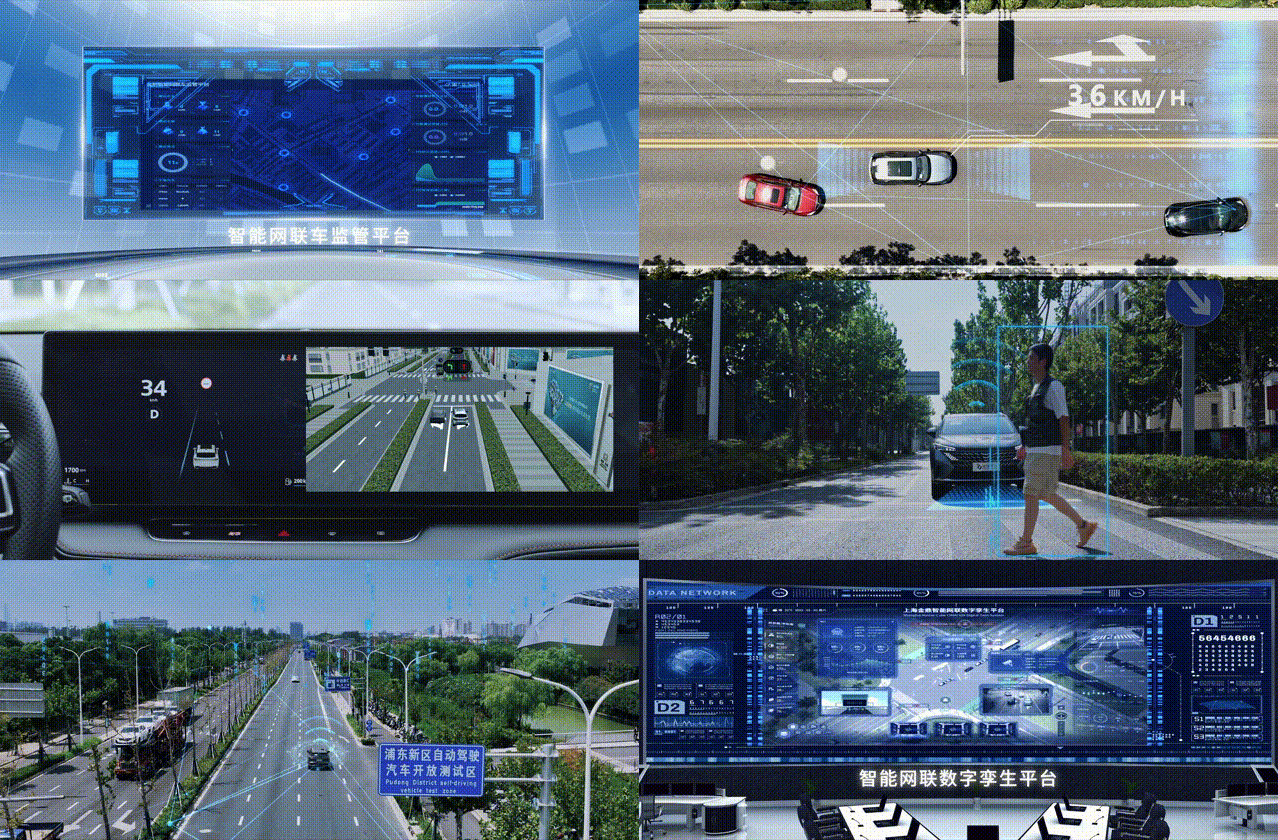
On the eve of 2022WAIC, on the morning of August 31st, Jinqiao Intelligent Networked Automobile Test Demonstration Zone in Pudong New Area of Shanghai was launched. The demonstration area covers the first self-driving open test road in the central city in China, and it is the open test road with the highest risk level in Shanghai at present (overall rated as level 3, the highest level 4).
 Source: Jinqiao released
Nationwide, L4-class self-driving cars take the lead in charging operation in Beijing, Wuhan, Chongqing and other places, and L4-class self-driving cars are threatening.
"From my personal point of view, the combination of the two may bring the tipping point of autonomous driving within five years." Chen Zhihua, vice president of collaborative business of Shangtang Technology Vehicle Road, believes that the detonation of L4 self-driving cars may come faster than expected. In his view, when to detonate depends on two conditions: first, cars with L2+ or above self-driving have reached the market volume of 100 million; Second, the mileage of vehicle-road coordination has reached a large scale.
Drivers with more than 99% smart car driving skills recognize the blue bus as the sky.
With the occurrence of smart car accidents, the safety of autonomous driving has also become the focus of public opinion. On the one hand, it is the response of car companies that "accidents have nothing to do with cars", and on the other hand, consumers question the safety of autonomous driving technology. If you want to occupy the mainstream of the market, one question that autonomous driving must face directly is, can the autonomous driving system really be as safe as a human driver?
Although some manufacturers said that in the simulation test platform, the driving ability of the system has been able to surpass human drivers. However, in the view of Cao Yingjie, a security research expert of 360 Digital Security Technology Group Co., Ltd., the performance in the simulation state does not guarantee that the system is safe enough in the real scene.
"Smart cars may surpass 99% drivers in driving skills, but they can’t be very accurate when identifying some common-sense objects." He explained, "because human beings have rich life experience, but cars only have driving experience and no life experience."
A typical example is that there was an accident in the United States in which Tesla chased a bus after driving automatically. The reason is that the system can’t distinguish the blue bus from the sky, and it is "mistaken" for the blue sky, which leads to the accident.
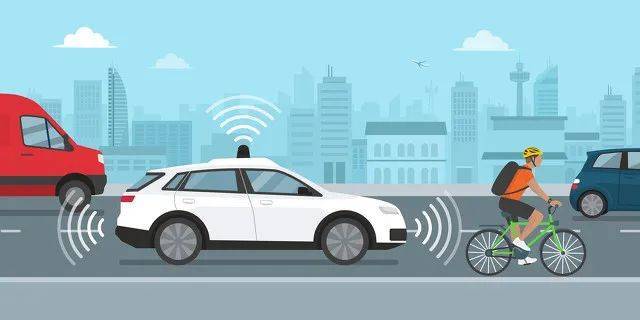
Such examples happen from time to time because there are still shortcomings in the current autonomous driving technology. In the path of autonomous driving technology, machine vision and lidar are the two most commonly used technical solutions for bicycle intelligence. The camera and radar waves loaded on the car body are equivalent to the eyes of the car, so that the car can "see", and the built-in algorithm model is responsible for thinking.
But whether it is a camera or a radar, it is easy to be deceived. With a little interference, the camera can recognize a panda as a monkey. Objects with rugged surfaces may make radar waves go back and forth, resulting in the system not recognizing them. Cao Yingjie said: "The clothes we wear are wrinkled or have the function of absorbing radar waves, which may make people’ invisible’ in radar."
 Source: Oriental IC
To make the system have a life experience comparable to that of human beings, it not only needs a rich enough training set, but also relies on highly integrated computing power support. At present, it is still difficult to achieve.
In order to avoid the possible security risks of a single technology, in recent years, autonomous driving manufacturers have been adding to the system security.
Machine vision and lidar overlap is the most common one. The intelligent heavy truck of Donghai Bridge is equipped with three sets of positioning systems: a visual positioning system, a laser positioning system and a satellite positioning system. "When any system in the car fails, the other two systems can ensure that our car can drive safely to the finish line." Zhang Xianhong, deputy general manager of Youdao Zhitu Intelligent Driving Center, said that the reuse of the two technologies and the improvement of the superposition algorithm can help heavy trucks identify 2 cm objects within 200 meters.
Another solution is to change the technical route, such as the popular V2X technology in recent two years. Compared with cameras and radars, V2X can achieve accurate positioning through the interconnection between cars and roads, cars and communication equipment, and make up for the shortcomings of insufficient perception, long tail challenge, high cost and difficult collaborative optimization in bicycle smart technology.
However, Bi Haizhou, director and executive deputy general manager of Datang Gaohong Zhilian Technology (Chongqing) Co., Ltd. also pointed out that in V2X technology, the industry is still facing the problem of improving road test coverage and vehicle end penetration.
Is the car in charge or the person in charge? Shanghai speeds up legislation on driverless driving.
With the market, crossing the security barrier, self-driving cars, especially L4-class driving cars, must be paved with laws and regulations. With the continuous progress of autonomous driving technology, the legislation of global autonomous driving is also advancing.
Germany is the first country in the world to allow L4-class self-driving cars to go on the road normally. In May 2021, the German Bundestag passed legislation to allow self-driving vehicles to drive on public roads. In May this year, Germany passed the Regulations on Autopilot Driving and Operation Management, which further improved the legal framework of autopilot.
China’s relevant legislation is also in progress. In July this year, Shenzhen took the lead in passing the local regulation "Regulations on the Management of Intelligent Networked Vehicles in Shenzhen Special Economic Zone", which regulates the identification of accident liability for L4 and above intelligent driving vehicles. The regulation was officially implemented on August 1 this year.
Relevant legislation in Pudong New Area of Shanghai is also on the way.
Shi Xiaolei, deputy director of the System Department of Shanghai Lingang New Area Management Committee, revealed some considerations in the formulation of Pudong local regulations. Pudong’s laws and regulations will cover both unmanned intelligent networked cars and unmanned equipment, and make breakthroughs in on-road test operation to solve the problems of on-road and market-oriented operation of driverless cars that enterprises are generally concerned about.
"From the perspective of risk prevention and control, there is still a lack of a series of systematic system design for unmanned intelligent networked vehicles." Shi Xiaolei said that in the future, Pudong will make breakthroughs in the fields of fault response, accident response, handling of traffic violations, emergency takeover, and suspension or termination of innovative applications.
In addition, Wu Junxian, deputy general manager of Shanghai Manufacturing Innovation Center (Intelligent Networked Car), pointed out that relevant departments also need to launch corresponding evaluation mechanisms for the existing assisted driving functions on the market. "After accidents like Tesla and Tucki, the public often throws a sharp question, that is, when an accident occurs, is the machine making a mistake or the human being making a mistake?" Wu Junxian said that if we need to define this issue, we need a credible institution to intervene and analyze and evaluate the relevant data.
Author/IT Times reporter Fan Xinru
Editor/Kicked Sister
Typesetting/Ji Jiaying
Photo/Jinqiao Releases Oriental IC
Source/IT Times WeChat official account vittimes